

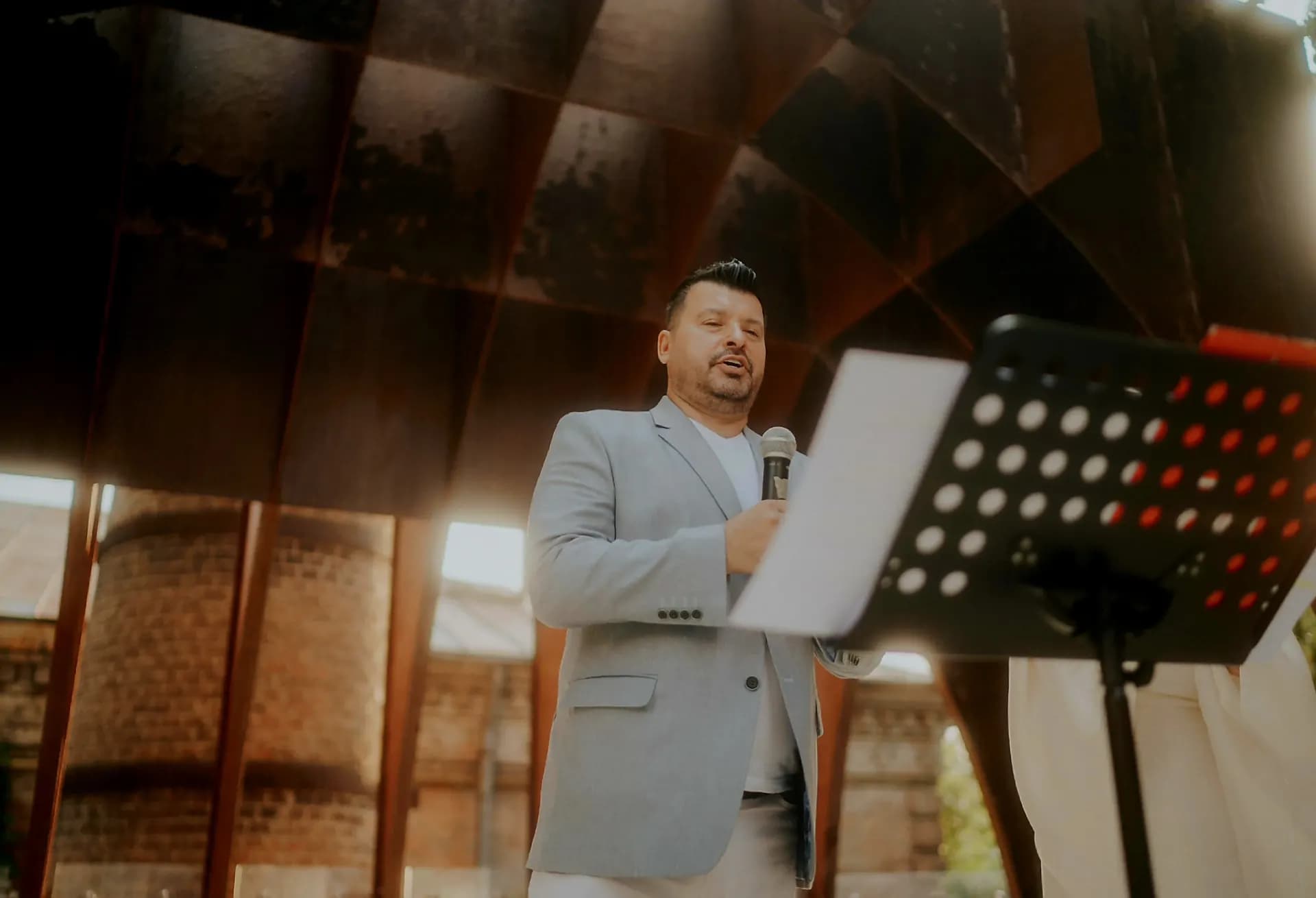
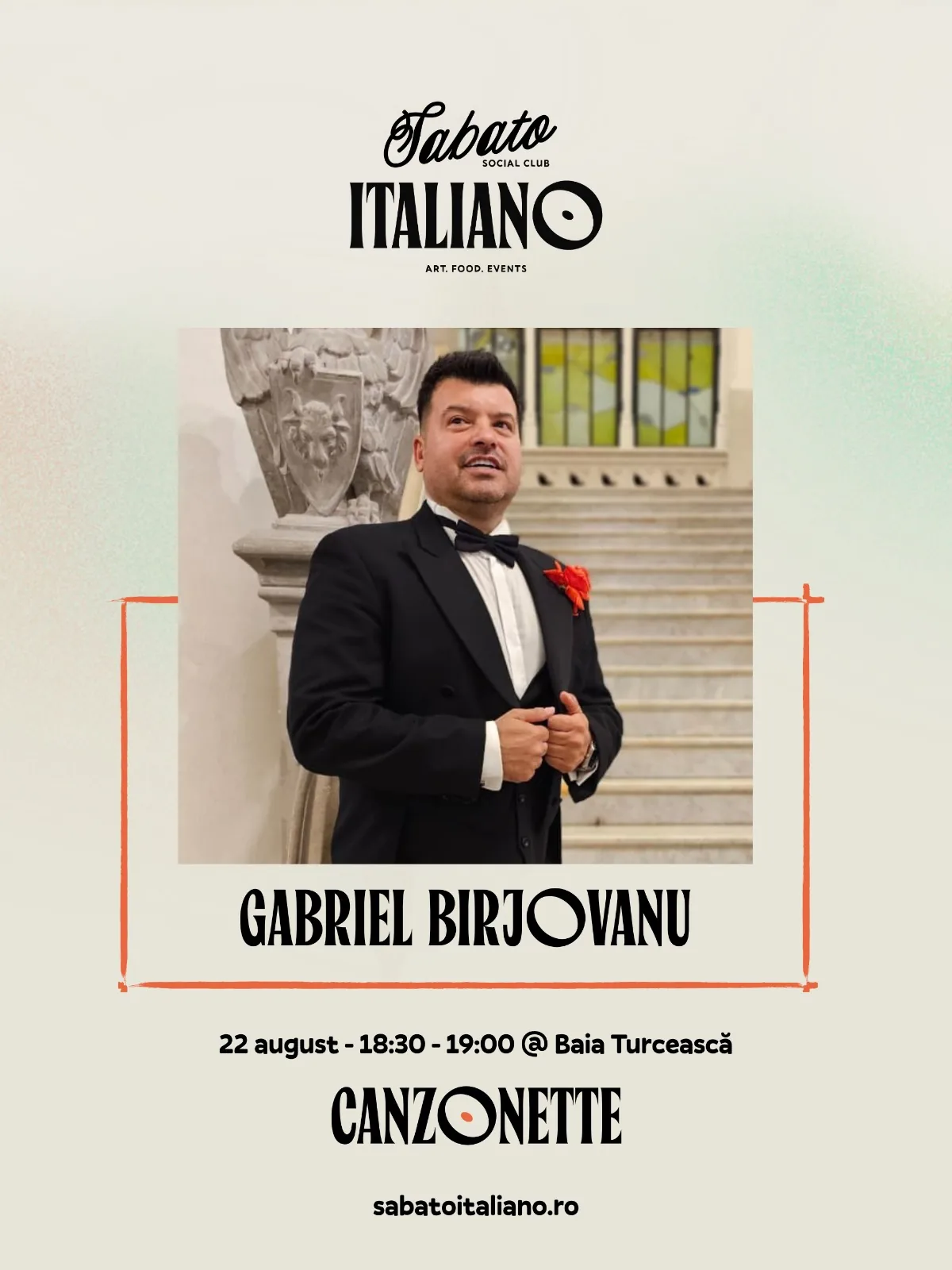
There are evenings when music needs no stage, only a balcony and a few people who stop talking. Such was Sabato Italiano, the event held at Casa Kieser in Iași, where tenor Gabriel Bîrjovanu, founder of SCANDINAVIA Music School, sang Neapolitan canzonette from the balcony.
The serenade, just as it was born
The Neapolitan canzonetta was not born in concert halls, but beneath windows. It is the music of the city of Naples: melodies written for voice and guitar or mandolin, sung in inner courtyards, along narrow streets and, very often, from below upwards, towards a balcony. The genre became famous in the nineteenth century, when the popular Neapolitan festivals launched songs each year that then spread throughout Italy. From there they entered the repertoire of the great tenors, and there they have remained to this day.
The evening at Casa Kieser reversed that geometry quite naturally: this time, the voice came from above. The audience looked up, and the sound descended between walls and balconies. It is exactly the setting for which this music was written – intimate, unceremonious, without the distance of a concert hall.
The story of the evening, told by the tenor
After the event, Gabriel Bîrjovanu described in his own words how he had experienced that evening:
I truly felt appreciated last night, at the Sabato Italiano event held at Casa Kieser. I had the joy of singing Neapolitan canzonette from the balcony, in a superb atmosphere that made me feel, for a few hours, as though I were in Italy itself. I wholeheartedly recommend that you stop by Casa Kieser, savour an espresso or an Aperol Spritz and enjoy this wonderful place. It is beautifully arranged (you will even see laundry hung out to dry between the apartments) and you will feel as if you were in Italy — but that clean, elegant Italy, full of very good taste. Thank you for the invitation and for the marvellous atmosphere!
What makes a canzonetta difficult
To a tenor accustomed to the opera stage, the canzonetta may look, at first glance, like the most comfortable part of the repertoire. In reality, it is one of the most exposed. There is no orchestra to hide behind, no recitative to prepare the audience, and it forgives not a single false inflection. Everything is decided within a few minutes, and in a few very concrete things:
- Legato – the phrase must flow unbroken, like sung speech.
- Diction – the Neapolitan dialect has a musicality of its own, different from literary Italian.
- Rubato – freedom of tempo, without which the song turns stiff and academic.
- The measure of emotion – the canzonetta lives on sincerity, not on volume.
It is a genre Gabriel Bîrjovanu turns to often, alongside opera, operetta and lied. And in a setting such as Casa Kieser, these four demands are heard at once, unfiltered.
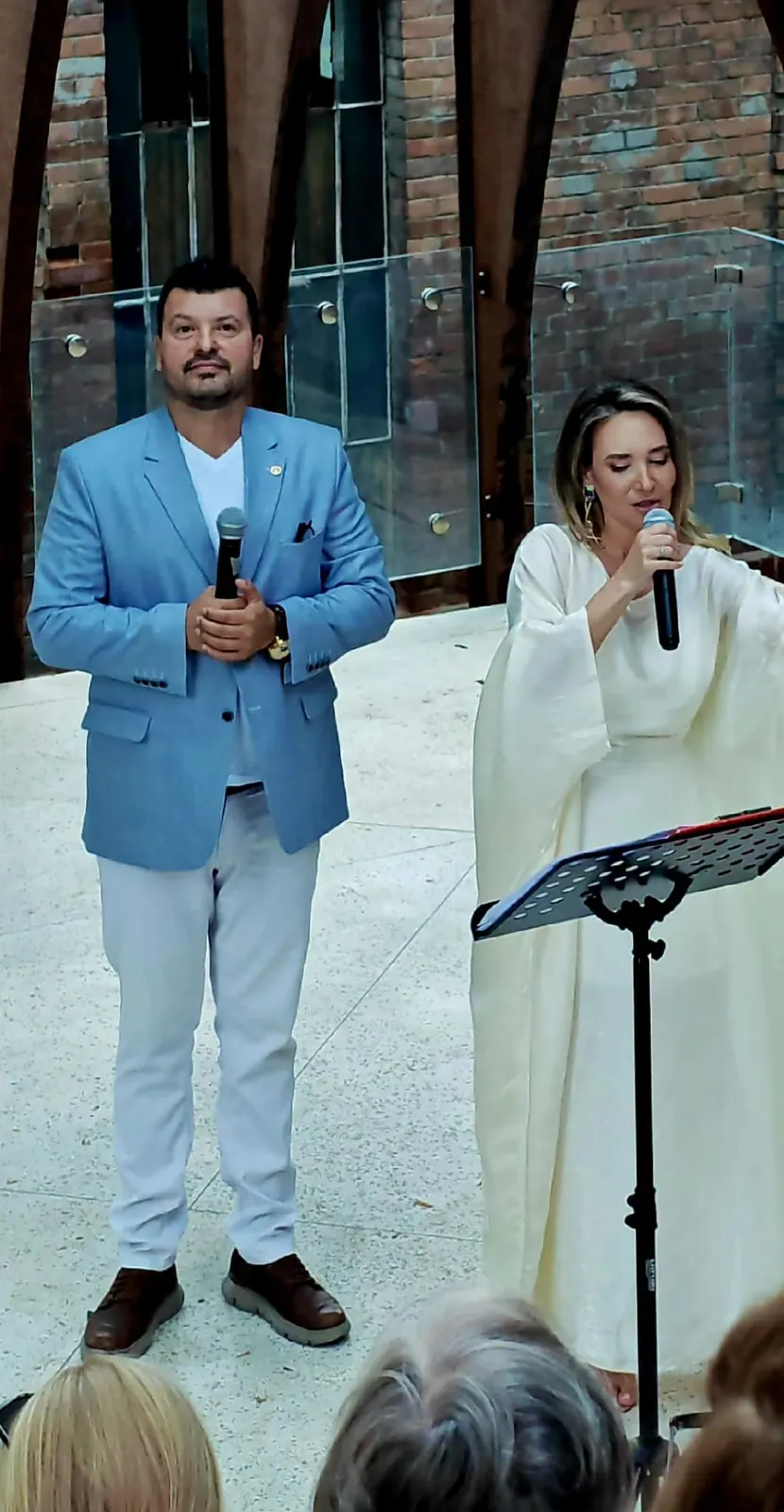
Live Balcony Performance Video — Casa Kieser
Gabriel Bîrjovanu — Neapolitan canzonettas performed from the balcony at Casa Kieser
View official Reel on InstagramEvent details
Date
Saturday, 22 August 2026, in the evening.
Venue
Casa Kieser, Iași – the recital was given from the balcony.
Programme
Neapolitan canzonette, as part of the Sabato Italiano event.
From the balcony, back to the classroom
For a music school, evenings like this are not merely public appearances. They are the best argument we can offer a student who asks why we spend months working on a single phrase. Because when the voice has to fill an open space, without the hall and the acoustics of an ordinary concert, every hour of practice can be heard – and so can every hour skipped.
And if you happen to pass through Iași, the recommendation remains the tenor's own: an espresso or an Aperol Spritz at Casa Kieser, a place that manages, effortlessly and without exaggeration, to bring a little of Italy into the city.